Patented Products
Type : Pre-shredder, Mobile Shredder, Mobile Crusher, Granulators, Powderisers, Material Separation, Sorting Machine, Baler Machine, etc.
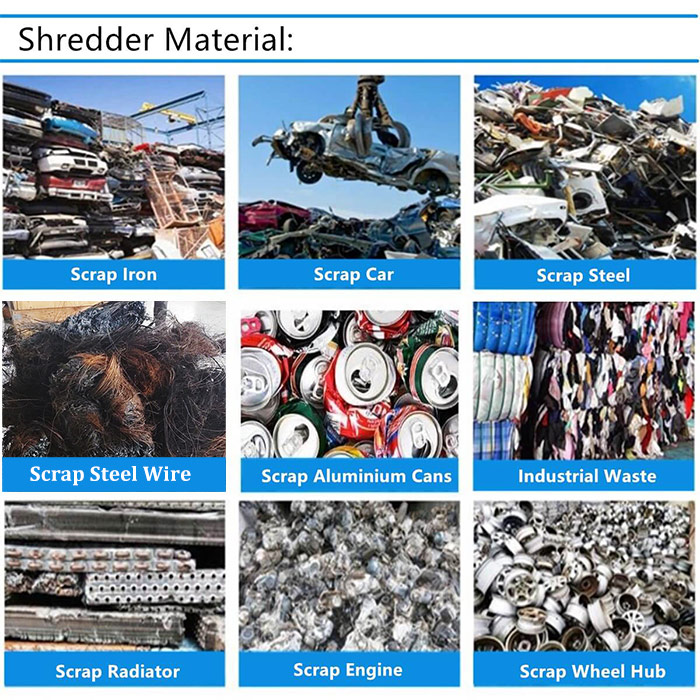
Applications: Scrap Car, Scrap metal, Scrap steel, Scrap iron, Scrap aluminum, Scrap Mixed Metal.

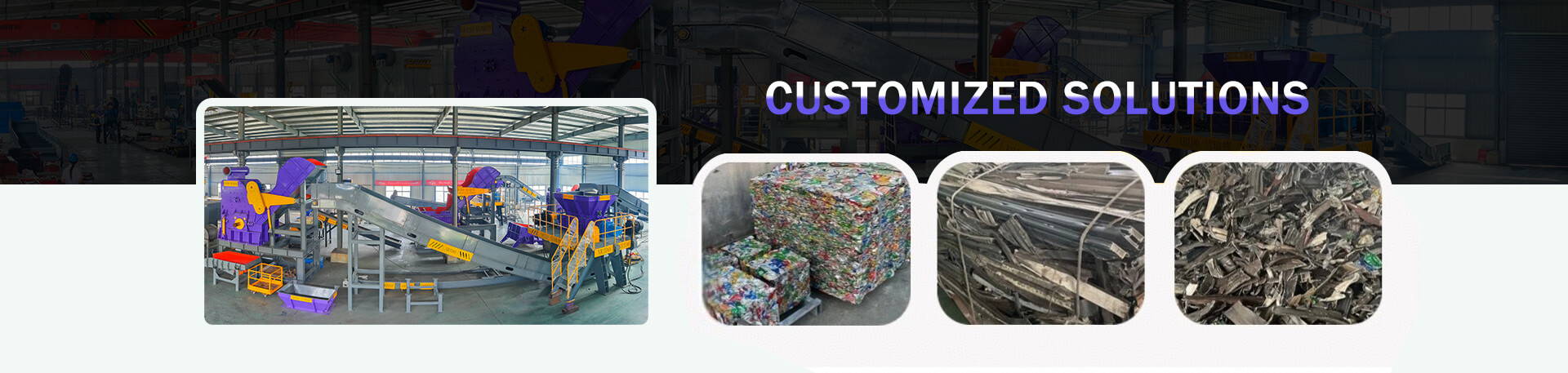
The mobile waste car crushing and sorting line is a tracked, fully mobile, two-stage crushing + metal sorting recycling system for end-of-life vehicles. It requires no fixed plant, allows for rapid relocation and commissioning, and is specifically designed to transform whole vehicles/shells into high-purity iron, copper, aluminum, and clean non-metallic materials.
Tracked Mobile Pre Shredder
Mobile Waste Car Crushing and Sorting Line
Free WhatsApp Quote Get a Free Quote
The Mobile Waste Car Crushing and Separation Line Process Flow:
Scrap car raw materials → MSTD670 mobile shredder (coarse crushing) → 950 mobile crusher (fine crushing) → Magnetic separator (for iron materials) → Eddy current separator (for copper, aluminum, and other non-ferrous metals) → Collection of non-metallic tailings such as plastics, rubber, and glass.

Free WhatsApp Quote Get a Free Quote


Free WhatsApp Quote Get a Free Quote
Core Equipment:

MSTD670 Mobile Shredder
Responsible for the coarse crushing of whole end-of-life vehicles and shells. Featuring a high-torque dual-shaft design and tracked mobility, it can operate on-site and relocate flexibly, effectively dismantling large materials.

950 Mobile Crusher
Handles coarsely crushed materials for medium and fine crushing, further reducing particle size and ensuring thorough separation of various metals and non-metals, guaranteeing effective subsequent sorting.

Magnetic Separator
Utilizes magnetic separation principles to precisely separate ferromagnetic metals such as iron from materials, achieving high purity in iron separation.

Eddy Current Separator
Separates non-ferrous metals such as copper, aluminum, and zinc from the residue after magnetic separation, enabling the classified recycling of valuable metals.
Free WhatsApp Quote Get a Free Quote
Mobile scrap car crushing and sorting line outputs:
The entire production line outputs four categories of finished products, with clear categories and high purity:
1. Scrap steel: Separated by magnetic separation, particle size 50–100mm, purity ≥98%, free of plastic and rubber impurities, can be directly recycled.
2. Copper, aluminum, and other non-ferrous metals: Eddy current separation produces a mixture of copper, aluminum, and zinc, with a separation rate ≥95%, uniform appearance, and high economic value.
3. Non-metallic mixtures: Includes automotive plastics, rubber, glass, sponge, fabrics, etc., with uniform particle size, suitable for secondary processing or harmless treatment.
4. Fine debris: Small amounts of dust and fine fragments are collected uniformly by a dust removal system to avoid dust pollution.

Free WhatsApp Quote Get a Free Quote








 Get Price
 WhatsApp