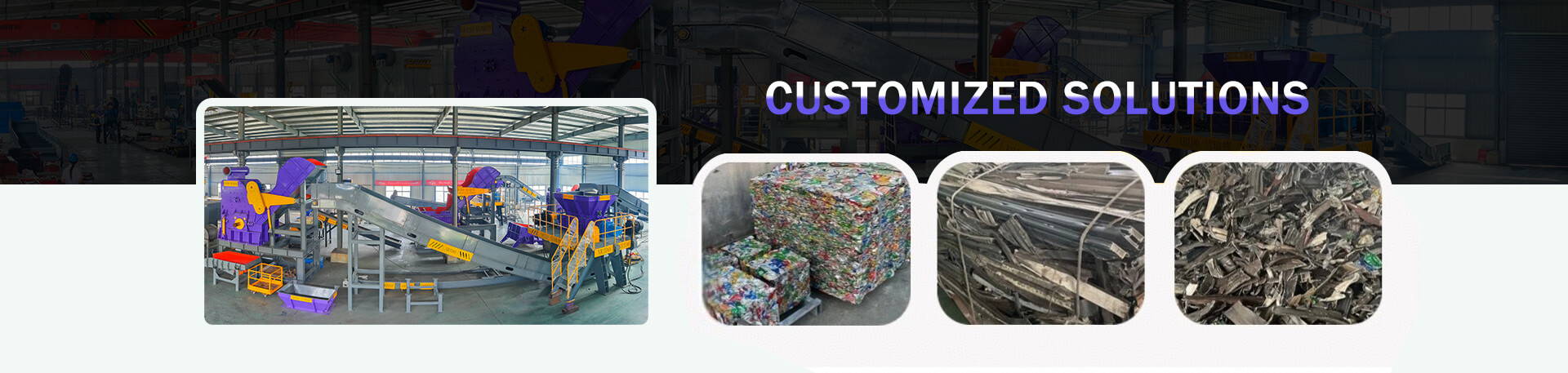
Patented Products for Reycling Fiberglass
Type: Pre Shredder, Industrial Shredder, Mobile Shredder, Metal Shredder, Solid waste disposal system.
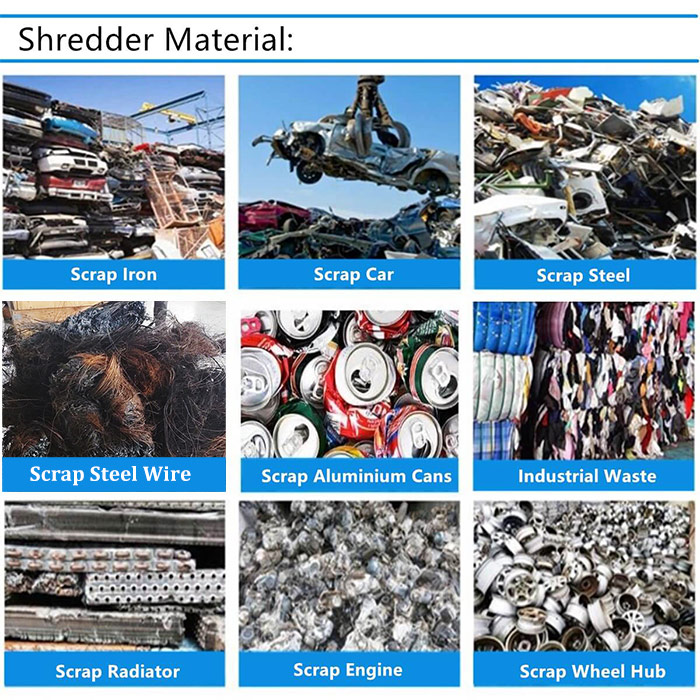
Applicable Material: Waste Wind Turbine, Various fiberglass products, Sponge, Textile, Leather, Wood, industrial waste, Plastics, Waste blue drum, Waste Metal, Solid waste etc.

The waste wind turbine blade crushing and sorting line is an integrated physical recycling system specifically designed for decommissioned fiberglass-reinforced epoxy resin wind turbine blades. The blades are mainly composed of epoxy resin, fiberglass, balsa wood core material, and embedded metal parts. This production line uses multi-stage mechanical crushing, multi-stage sorting, and dust and noise reduction to disassemble, reduce the volume, and separate the giant composite material blades. The mixed materials are separated into metal impurities, balsa wood, fiberglass mixture, and resin particles/powder, achieving resource-based solid waste disposal. This is currently the mainstream industrial recycling process for wind turbine blades.


Working Principle of the Waste Wind Turbine Blade Crushing and Separation Line:
The waste wind turbine blade recycling line employs a mechanical-physical method, without altering the chemical composition of the materials. Crushing and separation are achieved through mechanical force and differences in material properties:
1. Crushing Principle: A combination of low-speed, high-torque shearing and shredding combined with high-speed impact crushing is used. The dual-shaft shredder uses blades to shear and tear, breaking down the toughness of fiberglass; the fine crusher uses impact, compression, and grinding to break the bonding interface between the resin matrix and fiberglass, separating large pieces of material into particles.
2. Separation Principle:
- Magnetic Separation: Magnetic force adsorbs internal metal parts such as lightning protection metal and bolts from the blades;
- Vibrating Screening: Gradually classifies by particle size;
- Airflow Classification (Gravity Separation): Lightweight balsa wood floats, while high-density fiberglass/resin particles sink, separating the core material from the fiberglass;
- Fine Airflow Classification: Further separates resin powder from fiberglass flocs.
3. Environmental Protection Facilities: The entire line uses a closed negative pressure dust collection system, with pulse dust collectors to collect ultrafine dust and control dust leakage.

Applicable Materials:
I. Core Applicable Materials
Waste wind turbine blades (mainstream fiberglass reinforced epoxy resin composite blades)
Composition: Epoxy resin matrix, alkali-free glass fiber, balsa wood (lightweight wood) core material, PVC foam core material, metal embedded parts, lightning protection copper wire/aluminum parts, adhesive, protective outer coating.
II. Compatible and Expanded Materials
1. Various fiberglass products: Fiberglass pipes, fiberglass storage tanks, fiberglass profiles, fiberglass fishing boats, fiberglass gratings;
2. Other fiber composite materials: Fiberglass reinforced plastic (FRP), some carbon fiber composite panels (large-scale production of pure carbon fiber panels is not recommended due to extremely high wear);
3. Hybrid composite panels: Sandwich composite panels (fiberglass + foam/wood core sandwich components).

Waste wind turbine blade crushing and sorting line process flow:
Blade cutting and segmentation → Chain conveyor → Coarse shredding + primary iron removal → Fine crushing and separation → Secondary magnetic separation → Vibrating screen → Air classification (balsa wood separation) → Fine grading → Separate discharge of fiberglass mixture/resin powder → Dust collection system.








 Get Price
 WhatsApp